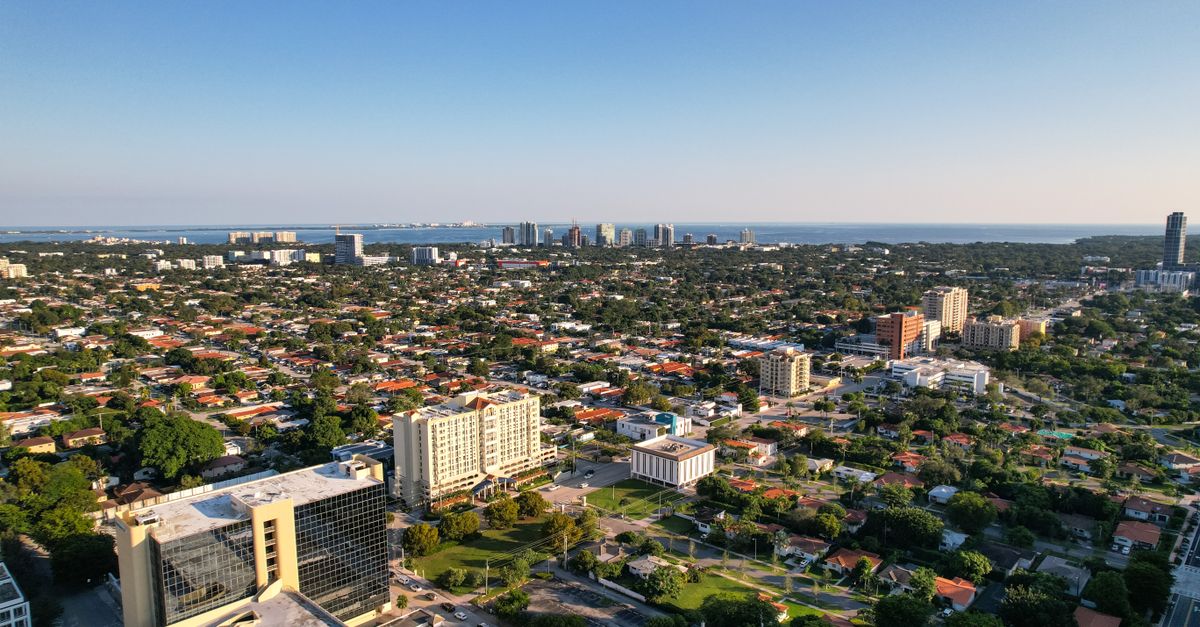
We are halfway through 2026, so this is less a forecast and more a mid-year reality check on where South Florida real estate is heading for the rest of the year. The short version: single family values are holding and even rising in Palm Beach County, the condo market is deep in buyer territory and still slipping, and the mortgage relief a lot of people expected simply has not arrived. The 30 year fixed sat at 6.43 percent in early July and is projected to hover near 6.4 percent through year end, with the Federal Reserve now more likely to hold than to cut. Here is the data driven outlook for South Florida for the rest of 2026, county by county and sector by sector.
Key takeaways
- Rates are staying put. The 30 year fixed was 6.43 percent in early July 2026, and Fannie Mae and the Mortgage Bankers Association project roughly 6.3 to 6.5 percent for the rest of the year. The June Fed projections leaned toward holding, so do not bank on a sharp drop before 2027.
- The three counties are diverging. Through spring 2026, Palm Beach County single family rose about 1.6 percent to a $538,000 median, Miami-Dade held near $581,000, and Broward slipped about 0.3 percent to $469,000.
- Single family stays a seller market. Supply sits around 5.4 to 6.2 months, close to balance, and homes still sell, though Miami-Dade days on market stretched to 96 from 86 a year earlier.
- Condos are firmly a buyer market. Miami-Dade condo supply is roughly 13 to 14 months, prices dipped to around $410,000 early in the year, and only about 0.9 percent of tri-county condo buildings qualify for FHA loans.
- Insurance is the bright spot. 2026 brought the first real premium relief in years, a genuine tailwind for values heading into the back half.
Where does the South Florida market stand at mid-2026?
At the halfway mark, South Florida is a two speed market, and the gap between the two speeds is widening. Single family homes are steady to strong, supported by tight supply, steady migration, and almost no room to build new houses near the coast. Condos are the opposite: oversupplied, cost burdened, and hard to finance, which is pushing prices down. Layered on top is a mortgage rate that has refused to fall, keeping monthly payments high for everyone. The result is a market that is neither booming nor crashing but slowly, unevenly rebalancing. For the on the ground snapshot, our West Palm Beach Q3 2026 update tracks the tri-county numbers in detail.
The first half of the year set the tone: modest single family gains, a steady drip of condo price cuts, and a mortgage rate that started the year in the mid 6s and stayed there. Nothing in the mid-year data suggests a sharp turn in either direction before December.
How do Miami-Dade, Broward, and Palm Beach compare right now?
The three counties are telling three different stories in mid-2026, and the differences matter for where you buy or sell:
- Palm Beach County is the strongest. Single family prices are up about 1.6 percent year over year to a median near $538,000, and homes are selling in about 80 days, faster than the 85 days a year ago. Demand is holding, especially in the growth corridors we cover in west of I-95.
- Miami-Dade is holding steady at market balance. The single family median is around $581,000 with roughly 5.4 to 6.2 months of supply, right at the seller to balanced line. The one soft signal is time on market: homes now take about 96 days to sell, up from 86 a year ago, so buyers have a bit more breathing room.
- Broward County is the softest of the three. Single family prices slipped about 0.3 percent year over year to a median near $469,000, though homes still sell quickly at about 80 days. Broward offers the best relative value of the three counties right now.
The pattern is clear: Palm Beach leads on price growth, Miami-Dade sits at equilibrium with slower sales, and Broward gives buyers the most room to negotiate.
What will mortgage rates do for the rest of 2026?
This is where the mid-year read differs most from the optimistic forecasts made in January. Rates are not falling. Freddie Mac put the average 30 year fixed at 6.43 percent in early July 2026, and the major forecasters see it staying there: Fannie Mae projects about 6.4 percent for the rest of the year, and the Mortgage Bankers Association calls for 6.4 to 6.5 percent through the third and fourth quarters. At its June meeting the Fed signaled it is more likely to hold than to cut, and some analysts, including Goldman Sachs, now expect no cuts until 2027.
For South Florida that means affordability stays tight through year end. Do not plan around a rate rescue in the back half of 2026. The buyers who win are the ones who qualify at today rates, negotiate on price, and refinance later if rates finally ease. Our look at whether now is the right time to buy walks through the lock versus wait decision at these levels.
The math is worth making concrete. At 6.43 percent, the principal and interest on a $500,000 loan runs a little over $3,140 a month, before taxes and insurance. A full year of rates stuck in the low to mid 6s is exactly why sales volume has been soft and why sellers who overprice are sitting longer. It also rewards buyers who can put more down or pay cash, which is part of why the condo segment, where cash buyers dominate, is still clearing even as prices fall.
Is the condo market going to recover in 2026?
No, not this year. The Miami-Dade condo market is the weakest corner of South Florida real estate, and the data says buyer friendly conditions will last through the rest of 2026. Condo supply is roughly 13 to 14 months, far above the six month balance line, and prices have started to fall, dipping to around $410,000 early in the year from about $455,000. Three forces are behind it:
- Assessments and reserves. Florida post-Surfside structural reserve rules and special assessments are hitting older buildings hard, and buyers are pricing that risk in. We detail the math in condo vs single family.
- A financing wall. Only about 21 of the roughly 2,397 condo buildings across Miami-Dade, Broward, and Palm Beach are approved for FHA loans, under 1 percent. That shuts many buyers out of low down payment financing and shrinks the buyer pool.
- Oversupply. Inventory did tick down about 2 percent, the first decline since 2023, but from a very high base, so it barely moves the needle this year.
For a cash buyer or a patient investor, this is opportunity: real negotiating power on price. Just underwrite the dues, the reserve study, and any pending assessment before you commit, because those costs are exactly why the discounts exist.
Which sectors will outperform in the second half of 2026?
Ranked strongest to weakest for the rest of the year:
- Single family homes: the region anchor, with tight supply and steady demand.
- Industrial and warehouse: still tight and rents firm on port and airport demand, as covered in South Florida industrial demand.
- Class A office: a flight to quality in Boca Raton and West Palm Beach keeps top buildings full at record rents, detailed in office space trends.
- Retail: well located suburban strip centers stay resilient.
- Condos: the clear laggard, oversupplied and cost burdened into 2027.
What could move the market before year end?
- Insurance relief, the tailwind. After years of spikes, 2026 finally brought premium cuts, which supports values and demand. The full picture is in our insurance and property values breakdown.
- Hurricane season. The August to October peak can reset insurance and sentiment fast. Preparedness matters, as we cover in our hurricane season tips.
- A rate surprise. If inflation cools faster than expected and the Fed cuts, buyer demand could jump late in the year. The base case is that it does not.
- Migration. South Florida keeps drawing residents and businesses from higher tax states, which keeps a floor under single family demand.
What should you do for the rest of 2026?
- Single family sellers: you still have the upper hand, but price to the market, since higher days on market in Miami-Dade shows buyers are pickier than a year ago.
- Condo buyers and cash investors: this is your window. Negotiate hard and underwrite the carrying costs before you sign.
- Buyers overall: qualify at 6.4 percent, not at a rate you are hoping for. First timers can start with our first-time homebuyer guide.
- Investors: favor cash flowing single family and small multifamily over condos, and look at value markets covered in our multifamily investing guide.
ConnectLinx gives South Florida buyers, sellers, agents, and investors one place to list, search, and track all three counties as the second half of 2026 unfolds, so you can see the tight single family segments and the discounted condo deals as they move. The rest of 2026 will not be a boom or a bust. It is a high rate, two speed market slowly finding balance, and the people who do best are the ones who read the county and the sector they are in and act on the numbers, not the headlines.